
New Construction Inspections: Why You Still Need One in a Brand-New Home
By Shannon Miles, GRI, CLHMS · Last updated June 11, 2026
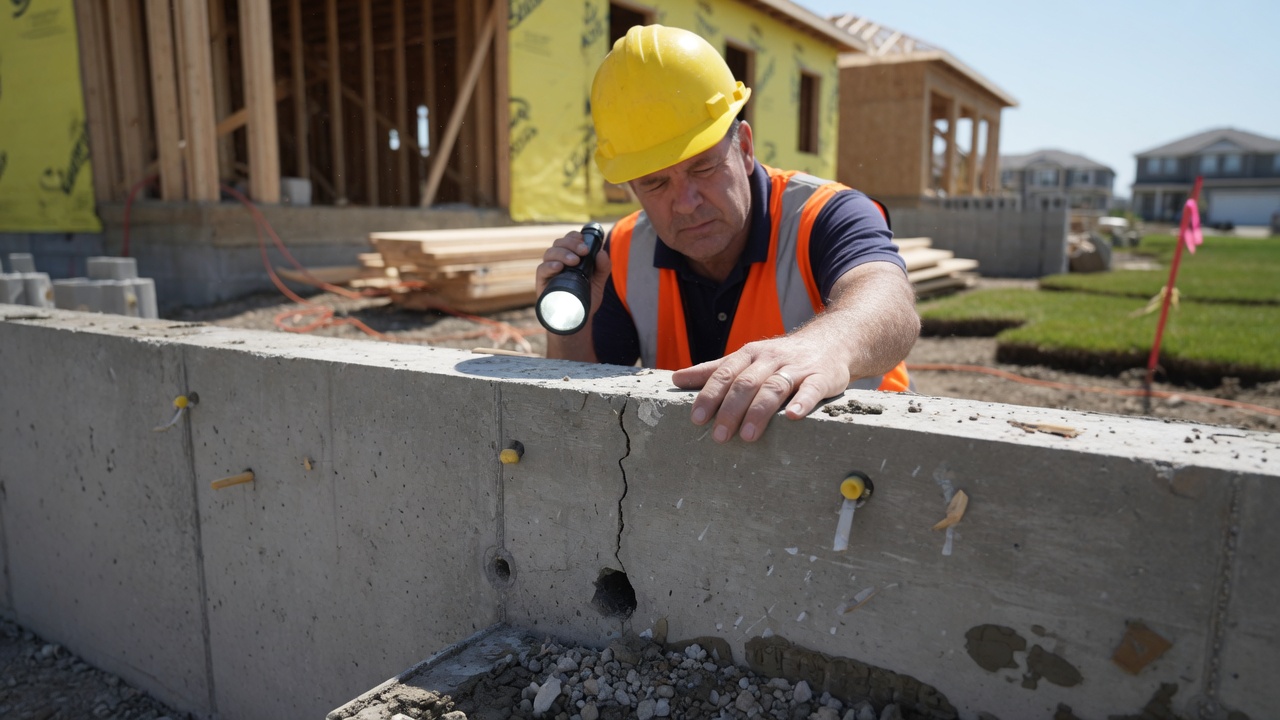
There is a common assumption among new construction buyers that a brand-new home does not need an inspection. The home was just built. Everything is fresh, up to code, and untouched. Why would you pay for an inspection on something that has never been lived in?
Because new does not mean perfect. And the municipal code inspection that your city or county requires is not designed to protect your investment. It is designed to verify minimum safety compliance. Those are two very different things.
At the Shannon Miles Group, we recommend independent inspections for every new construction purchase in Northeast Texas. Here is why, when you should schedule them, and what they actually catch.
The difference between a code inspection and a buyer inspection
When a builder pulls permits for a new home, the local building authority sends an inspector to verify that the construction meets minimum building code. That inspector checks for basic safety compliance: proper footing depth, adequate nailing patterns, correct electrical wiring, and functional plumbing connections.
What they do not do is evaluate the quality of workmanship. They are not checking whether the drywall is smooth, whether the HVAC system is balanced room by room, whether the plumbing drains at the correct slope, or whether the exterior grading directs water away from the foundation. They are not looking for the small defects that become expensive problems over the next several years.
An independent inspector works for you. Their job is to evaluate the home with a critical eye, document deficiencies, and give you a report you can hand to the builder before closing. That report becomes leverage for getting issues resolved while the builder is still obligated to fix them.
The three inspections every new construction buyer should schedule
Pre-slab or pre-pour inspection. Before the foundation is poured, an inspector can verify that the soil preparation, vapor barrier, plumbing rough-in, and post-tension cable layout are correct. Once the concrete is poured, these components are permanently hidden. If something is wrong underneath the slab, you will not discover it until a pipe leaks or a cable fails, at which point the repair is disruptive and expensive.
In Northeast Texas, where expansive clay soils are common, proper soil preparation and moisture barriers are especially important. An improperly prepared slab on reactive soil can lead to foundation movement within the first few years. A pre-slab inspection catches these issues before they become structural problems.
Pre-drywall inspection. This is the single most valuable inspection in the new construction process. Before the builder hangs drywall, an inspector can evaluate the framing, electrical rough-in, plumbing rough-in, HVAC ductwork, insulation, and structural connections. Once drywall goes up, all of these systems are hidden behind walls.
Pre-drywall inspections commonly catch issues like improperly spaced framing members, missing or inadequate insulation, HVAC ducts with restricted airflow, electrical circuits that do not meet load requirements, and plumbing connections that are not properly supported. None of these are rare. All of them are easier and cheaper to correct before the walls are closed.
Final or move-in inspection. This happens after the builder completes the home and before you close. Think of this as a detailed punch-list inspection. The inspector evaluates everything visible: appliances, fixtures, windows, doors, trim, paint, flooring, grading, drainage, and all mechanical systems. You receive a written report of any deficiency, and the builder is expected to address those items before closing or shortly after.
This is not the same as the builder's own walkthrough. The builder's quality check is internal. An independent final inspection gives you a third-party assessment with no conflict of interest.
What these inspections typically find
New construction inspections are not about finding catastrophic failures. They are about finding the dozens of small defects that are normal in any construction project but that accumulate into real problems if they go unaddressed.
Common findings include gaps in insulation around electrical boxes and top plates, which reduce energy efficiency. Plumbing traps with improper slope, which cause slow drains and sewer gas odors. Missing or incomplete caulking around windows and doors, which allows water intrusion. HVAC systems with disconnected ducts or restricted airflow in certain rooms. Nail pops in framing that will telegraph through drywall over time. And exterior grading that slopes toward the foundation instead of away from it.
None of these are unusual. All of them are correctable before closing. And none of them will show up in the builder's standard code inspection.
What happens if you skip the inspection
Without an independent inspection, you are relying entirely on the builder's internal quality process and the municipal code inspector. Both have limitations. The builder is balancing quality against schedule and cost. The code inspector is verifying minimum compliance, not advocating for your comfort or long-term investment.
Once you close and move in, the burden shifts to you. Texas builders typically provide a warranty, often structured as a one-two-six warranty: one year for workmanship and materials, two years for major mechanical systems like plumbing, electrical, and HVAC, and six years for structural components. Under the Texas Residential Construction Liability Act, you have recourse for defects, but the process is far easier when you have documented the issues before closing rather than discovering them after the fact.
An inspection report created before closing gives you clear documentation of what the builder knew and when they knew it. That documentation protects you if the builder becomes unresponsive after move-in, which, unfortunately, is not uncommon.
How this applies to Forestbrook Estates and Northeast Texas
At Forestbrook Estates in Paris, TX, homes are being built by established production builders. These builders have trained construction crews and standard quality processes, but they are also building at volume. Volume builders schedule multiple closings per week, and that pace can lead to oversight on individual homes.
An independent inspection does not assume the builder is doing a poor job. It assumes that any complex construction project benefits from a second set of qualified eyes. That is true whether you are building at Forestbrook Estates, in Sherman, in Bonham, or anywhere else in Northeast Texas.
The cost of a single inspection typically ranges from $300 to $600, depending on the stage and the size of the home. The cost of not inspecting can run into thousands of dollars in repairs that fall within your warranty period but are far more difficult to prove and enforce without prior documentation.
How a buyer's agent helps with inspections
We do not perform inspections ourselves, but we do recommend trusted, independent inspectors who specialize in new construction. We attend pre-drywall and final walkthroughs with our clients. We review the inspection report with you and help you organize the findings into a clear, actionable punch list for the builder. And we follow up to make sure the builder addresses every item.
This is one of the most practical ways we protect our clients' investments. A great inspection report means nothing if it sits in an email and the builder never responds. We make sure it does not.
The bottom line
A new construction home is a significant investment, and it deserves the same level of due diligence you would give any major purchase. Independent inspections at pre-slab, pre-drywall, and final walkthrough are the most cost-effective way to protect that investment, document your home's condition, and make sure the builder delivers on the quality they promised.
Shannon and Scott Miles are new construction buyer specialists at eXp Realty in Paris, TX. They guide buyers through every phase of the new construction process, including inspection scheduling, builder communication, and warranty follow-up. If you are building at Forestbrook Estates or anywhere in Northeast Texas, having a team that knows what to inspect and when to inspect it is one of the most valuable forms of protection you can bring to the process.
No pressure. No obligation. Just a team that helps you build with confidence and close with clarity.
Building soon? Let us protect your investment.
From pre-slab to final walkthrough, we recommend the right inspections at the right time and make sure the builder addresses every finding. Reach out to get started.
Contact Shannon Miles Group